Executive Summary
A hindcast is a numerical reconstruction, not a measurement, and the gap between the two decides whether your design extremes and weather windows are sound. We unpack what ISO 19901-1, DNV-RP-C205 and marine-operations guidance actually demand of hindcast validation, where validation passes on paper but fails on the tail, and the concrete checks to run before you sign a database off for a site campaign.
On this page11 sections
- What a new validation paper puts back on the table
- What the standards already demand of a hindcast
- Validation as it actually runs on a site campaign
- Where validation quietly passes but the data still lies
- 1. The bulk agrees and the tail does not
- 2. The overlap is too short and the wrong season
- 3. Co-location error is read as model error – or ignored
- 4. Currents are assumed validated because waves were
- 5. Only scalar height is checked, not period, direction or spectral shape
- 6. The reference is treated as truth
- What to settle before you sign the hindcast off
What a new validation paper puts back on the table
In the October 2026 issue of Applied Ocean Research (Volume 175), Christos Stefanakos, Iñigo Aguilera, Caio Fonteles and Øyvind Knutsen return to a question every metocean lead has had to answer under commercial pressure: how far can a hindcast database be trusted, and what does it take to confirm that trust against measured data for a specific site. That is the whole discipline in a sentence.
A hindcast is not an observation. It is a numerical reconstruction of past wind, wave, current and water-level conditions, produced by forcing a wave or circulation model with reanalysis winds and pressures over decades. It exists because the records we actually need for design – thirty years or more of continuous, co-located measurement – almost never exist at the site in question. The hindcast fills that gap. The validation question is whether it fills it accurately enough for the decision you are about to make, and that is not a single answer. It depends entirely on what the data is for.
What the standards already demand of a hindcast
The validation requirement is not optional and it is not new. It is written into the metocean standards that underpin offshore design.
ISO 19901-1 (metocean design and operating considerations) is explicit that derived metocean parameters must account for the uncertainty in their source, and that modelled data used for design has to be validated against measurements where those are available. It does not let you treat a hindcast node as ground truth. DNV-RP-C205 (environmental conditions and environmental loads) carries the same expectation into the derivation of return-period values and joint distributions – the extremes you feed into structural analysis inherit the model’s error, and that error must be quantified, not assumed away. On the Norwegian shelf, NORSOK N-003 sits over the same ground; for the Gulf of Mexico and much of the rest of the world, API RP 2MET plays the equivalent role.
For offshore wind, IEC 61400-3-1 and the associated technical specifications push the same principle into the wind resource and design load cases, and the Carbon Trust Offshore Wind Accelerator recommended practices have become the de facto reference for how a metocean dataset should be assembled and checked before it anchors a project.
There is a second family of standards that cares about hindcast quality for an entirely different reason. DNV-ST-N001 (marine operations and marine warranty) relies on operational metocean statistics – persistence, weather windows, the alpha factors that relate a forecast limit to an operational limit – and a marine warranty surveyor will want to understand where those statistics came from and how well the model reproduces the conditions that actually stop work. Design and operations place different loads on the same database, and a hindcast validated for one is not automatically fit for the other.
The common thread across all of these is simple to state and awkward to deliver: the model must be shown to reproduce the real sea state at the real location, with the error characterised well enough to carry forward into the design or planning decision.
Validation as it actually runs on a site campaign
Validation means co-locating the hindcast with in-situ measurement and quantifying the disagreement, parameter by parameter.
The measured reference for waves is normally a surface-following buoy – a Datawell Waverider or equivalent – giving significant wave height, peak and mean periods, spectral shape and direction. Currents come from a bottom-mounted or moored ADCP returning a velocity profile from near-bed to near-surface. Water level comes from a pressure gauge or tide gauge, wind from a met mast or LiDAR. Satellite altimetry gives independent wave-height cross-checks offshore where a buoy is absent. None of these is error-free, and that matters later.
The standard metrics are well established and worth naming precisely, because they test different things:
- Bias (mean error) tells you whether the model runs systematically high or low.
- RMSE and the scatter index (RMSE normalised by the mean observation) measure the spread of disagreement. For significant wave height in open water, a scatter index in the region of 0.10–0.15 is commonly treated as good agreement; nearshore and in complex topography it degrades, and values well above that are routine rather than alarming.
- Correlation and regression slope show whether the model tracks the timing and dynamic range of events.
- Quantile–quantile comparison is where the design case lives. A QQ plot exposes whether the model reproduces the upper tail of the distribution – the storms – and this is usually where a dataset that looks excellent on bulk statistics starts to come apart.
A disciplined validation produces this set per parameter – Hs, Tp, mean period, mean direction, directional spread, wind speed and direction, the current profile at several bins, and water level with its tidal and residual components separated. A single wave-height scatter index is a headline, not a validation.
Where validation quietly passes but the data still lies
The failures we see most often in review are not crude. The dataset passes the obvious test and fails the one that mattered.
1. The bulk agrees and the tail does not
A hindcast can show excellent bias and scatter index across the body of the distribution and still underestimate the one-in-fifty-year sea state, because wave models frequently clip the most severe events – limited by the quality and resolution of the forcing winds, by source-term physics, and by the grid’s inability to resolve a rapidly deepening storm. If your validation stops at bulk statistics and never interrogates the top one percent of the distribution, you have validated the data for fatigue and signed it off for ultimate limit state without evidence. The QQ tail and the extreme-value analysis are the test that counts for design. The same discipline applies on the water-level side, where surge and its joint occurrence with tide drive the design case; we have set out separately what a metocean lead needs to confirm on extreme water levels for offshore design.
2. The overlap is too short and the wrong season
Validation is only as good as the concurrent record. A three-month buoy deployment over a calm summer tells you nothing about how the model handles winter storms, and it certainly cannot validate a fifty-year return value. You can have a statistically clean comparison that is simply blind to the conditions that govern the design. Twelve months of overlap to capture full seasonality is a sensible floor for operational statistics; extremes need a long model record with an independent check, and that is where multi-mission satellite altimetry earns its place for offshore wave validation.
3. Co-location error is read as model error – or ignored
A buoy is a point. A hindcast node represents a grid cell, sometimes kilometres across, and the nearest node is rarely exactly under the buoy. Part of the apparent disagreement is spatial separation, not model skill, and in a strong gradient near a coast or a bank it is not small. Treating the whole residual as model error distorts any bias correction you then apply. The honest approach is to account for the separation explicitly, not to pretend node and buoy are the same place.
4. Currents are assumed validated because waves were
This is the most consequential shortcut in the field. Hindcast currents are the weakest product in almost every database. Regional circulation models struggle with residual and baroclinic flow, eddies, and the near-bed profile, and a wave hindcast being excellent says nothing about the current field at the same site. Current drives riser and mooring design, drag on structures, scour and installation feasibility, and it generally cannot be taken from a hindcast for design without in-situ confirmation. That means an ADCP in the water for a representative period – a programme with its own practical difficulties around mooring, data return and biofouling, which we have looked at in the context of getting ADCPs deployed and keeping them returning data.
5. Only scalar height is checked, not period, direction or spectral shape
Fatigue and resonant response depend on period and spectral shape; downtime and directional loads depend on where the sea comes from. A validation that confirms Hs and ignores Tp, mean direction and directional spreading has checked the easiest parameter and left the ones that drive structural response unverified.
6. The reference is treated as truth
Buoys drift within their watch circle, lose calibration, and suffer data gaps. ADCPs foul and their near-surface bins are contaminated by side-lobe reflection. The measurement has its own uncertainty, and a sensible validation states it rather than assuming the instrument is perfect and every discrepancy is the model’s fault.
What to settle before you sign the hindcast off
Validation is an engineering decision with acceptance criteria, not a report appendix. Set it up accordingly.
-
Define acceptance criteria by application, in writing, before you validate. For fatigue and operability, set targets on bias and scatter index across the full distribution of Hs, Tp and direction. For ultimate limit state, set a target on QQ agreement in the upper tail and require that the extreme-value analysis carry the model’s residual uncertainty through to the return-period estimate. The same database can pass one and fail the other, and that must be visible.
-
Fix a minimum concurrent record and check its seasonal coverage. Treat twelve months of overlapping in-situ as a floor for operational statistics, and do not claim extreme validation from a short deployment. Extend offshore wave validation with satellite altimetry where no long buoy record exists.
-
Validate every design-driving parameter separately. Produce the metric table for Hs, Tp, mean period, mean and peak direction, directional spread, wind speed and direction, the current profile at near-surface, mid-depth and near-bed bins, and water level with tide and residual separated. Do not let one good number stand in for the set.
-
Do not take currents from a hindcast for design. Deploy an ADCP for a representative campaign, validate the profile against it, and state plainly where the hindcast current field is used only for screening rather than design.
-
Downscale before you validate nearshore. A regional or global hindcast at a coastal, sheltered or shallow site is being asked to resolve refraction, shoaling, depth-induced breaking and island sheltering it was never built to capture. Nest a local wave model (SWAN or equivalent, WRF for wind) and validate the downscaled product, not the parent grid.
-
Correct bias transparently and carry the residual uncertainty forward. If you apply a QQ-based bias correction, document it, state the residual scatter after correction, and feed that uncertainty into the extreme-value analysis rather than presenting a corrected series as if it were measured.
-
Cross-check against independent hindcasts. Compare at least two independent sources – a global reanalysis-driven product and a regional hindcast, plus a commercial dataset where budget allows. The spread between them is a direct, honest measure of model uncertainty at the site, and it is information a design team and a warranty surveyor both need.
-
Keep an audit trail. Record the node-to-sensor separation, the overlap period, the metrics, the acceptance criteria and the pass/fail decision. A certifier under ISO 19901-1 or a marine warranty surveyor under DNV-ST-N001 will ask how the numbers were derived, and “it came from the database” is not an answer.
The early warning that validation is going wrong is usually quiet: a headline scatter index that looks excellent, a report with no QQ tail plot, currents cited from the same source as the waves, and an overlap period that happens to miss the storm season. When those four appear together, the hindcast has not been validated for the decision it is about to support – it has merely been described.
Based on: Trusting hindcast databases: validating metocean models against in-situ data for site campaigns
Published by
Ocean & Climate Observatory
Tides, Currents, Waves & Weather Forecasting
An observatory group covering metocean data analysis, hindcast modelling, oceanographic survey planning, and environmental risk assessment for marine operations.
Read next
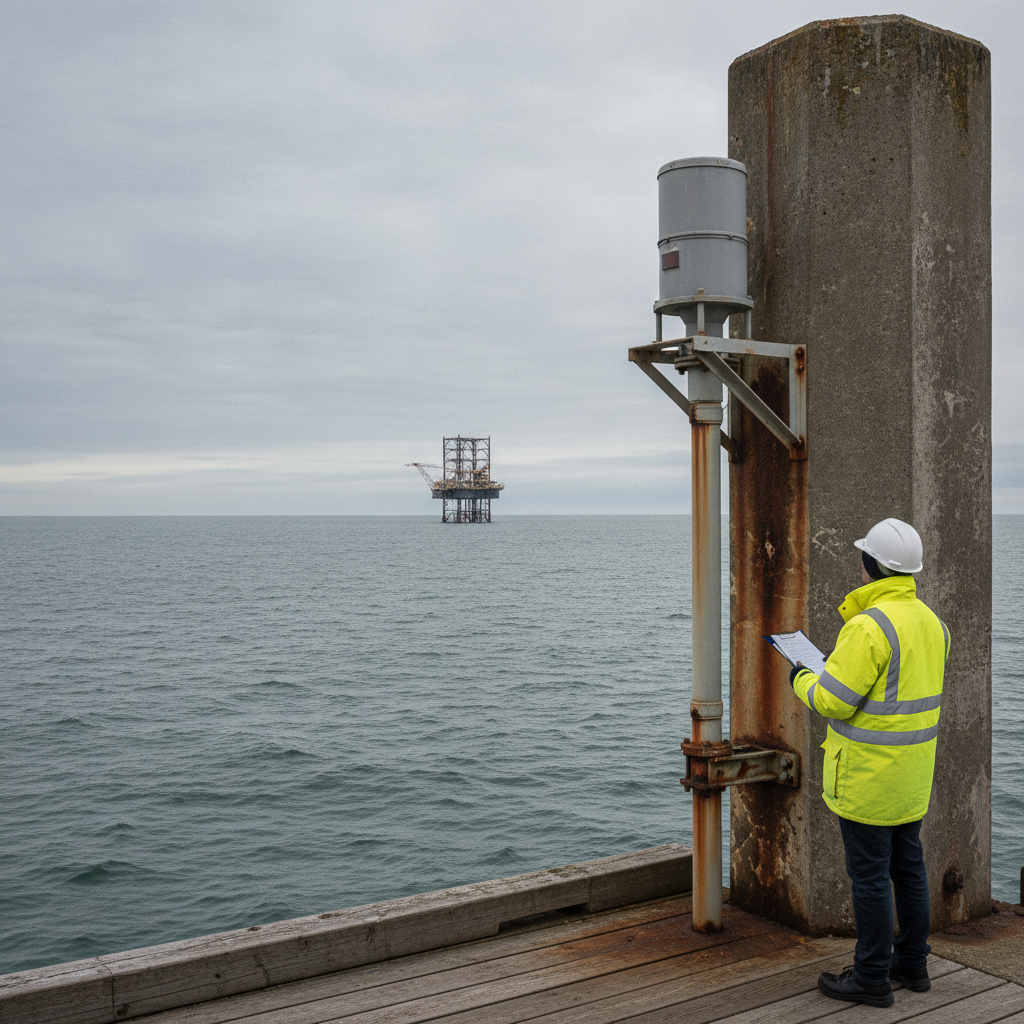
Extreme sea level for offshore design: what metocean leads must validate
A senior engineering read on extreme sea level estimation for offshore design – datum integrity, extreme value method choice, non-stationarity and the air-gap consequence.
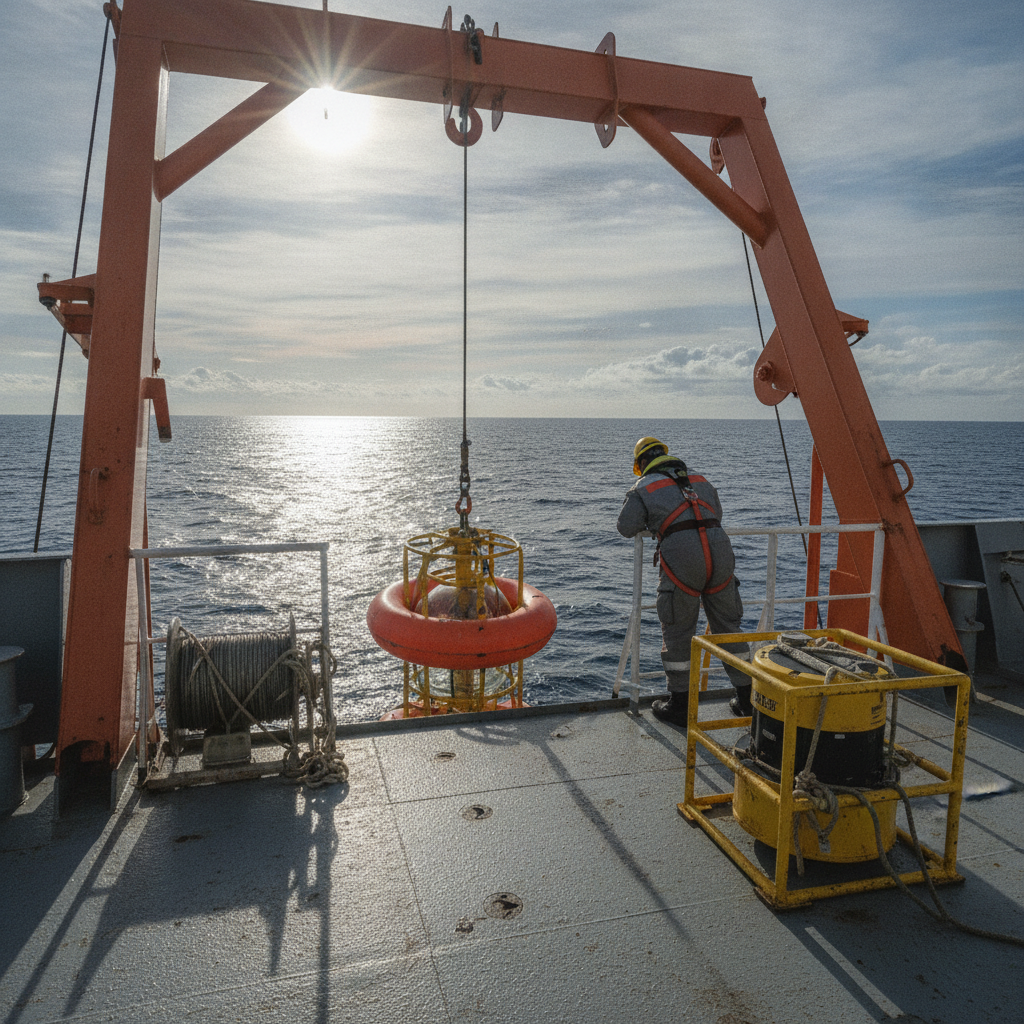
Deep-sea mining EIAs: ADCP deployment reality vs regulatory demand
Deep-sea mining EIA baseline monitoring with ADCPs: what ISA rules require for currents and sediment plumes, and where survey managers under-scope.
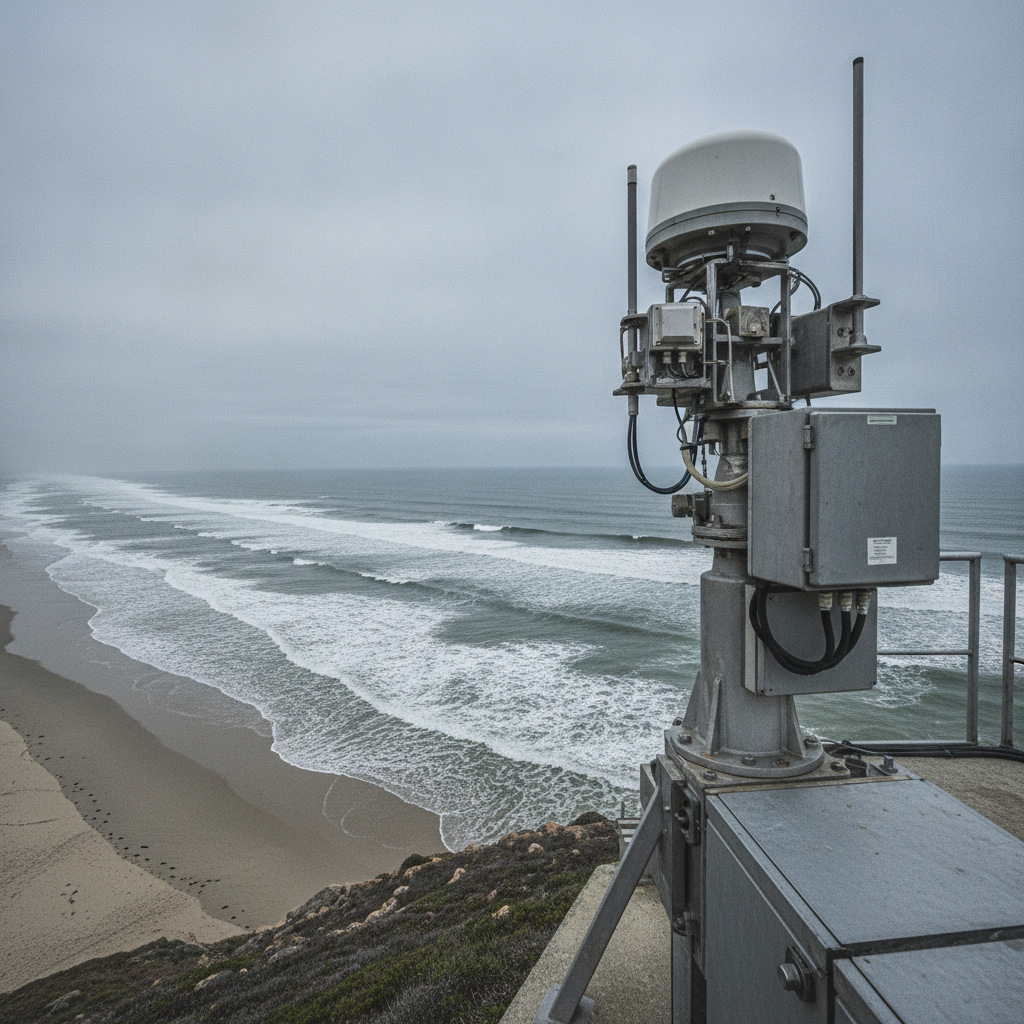
Radar-derived bathymetry: where wave inversion sits beside multibeam
How X-band radar sea-state inversion estimates depth, where it meets and misses IHO S-44, and how to blend it with multibeam for nearshore monitoring.
Offshore Geomatics Foundation Certificate · October 2026
Turn reading into certified competence
You have just read what a standard actually requires – and where it stops. The Foundation Certificate exists to prove you can work with that distinction.
Early-access list gets 40% off at launch. No spam – the waitlist is only ever used for the certificate. What the certificate covers →