Executive Summary
The Jackdaw gas field, located around 250 km east of Aberdeen in the UK North Sea, has become one of the most closely watched energy developments in Britain. Originally approved in 2022, the project has subsequently become entangled in legal challenges, environmental concerns and political debate. It now sits at the centre of a broader national argument: how does the UK balance energy security, economic growth and climate commitments in an era of energy transition?
On this page23 sections
- What is Jackdaw?
- The Protagonists
- Supporters: Shell / Adura
- Supporters: Industry Bodies and Supply Chain Companies
- Supporters: Energy Security Advocates
- Opponents: Greenpeace and Uplift
- Opponents: Climate Campaigners
- Arguments in Favour of Approval
- 1. Energy Security
- 2. Supporting Jobs and the Economy
- 3. Lower Emission Intensity than Imports
- 4. Utilisation of Existing Infrastructure
- Arguments Against Approval
- 1. Climate Change Concerns
- 2. Legal and Regulatory Challenges
- 3. Questions Over Actual Impact on Energy Independence
- 4. Risk of Delaying the Transition
- Possible Outcomes
- Full Approval
- Conditional Approval
- Further Delays
- Rejection
- If Approval Is Granted
What is Jackdaw?
Jackdaw is one of the largest undeveloped gas fields in the UK Continental Shelf. The development was originally led by Shell and is expected to be tied back to the existing Shearwater infrastructure, allowing gas to be processed and transported to the St Fergus gas terminal in Aberdeenshire. Supporters argue the project could contribute around 6% of UK gas supply during peak production and provide enough gas to heat approximately 1.4 million homes. However, what might once have been viewed as a routine offshore development has evolved into a test case for the future of UK energy policy.
The Protagonists
Supporters: Shell / Adura
The project developers argue that Jackdaw is a strategically important energy asset. They maintain that domestic gas production is preferable to increasing reliance on imported liquefied natural gas (LNG), particularly given geopolitical uncertainty and continuing volatility in energy markets. They also highlight the substantial investment already made and the jobs supported by the development.
Supporters: Industry Bodies and Supply Chain Companies
Many offshore contractors, service companies and trade organisations support the project because of its potential to sustain employment, particularly in north-east Scotland. With many mature North Sea fields in decline, new developments such as Jackdaw are viewed as essential to maintaining activity levels and workforce capability.
Supporters: Energy Security Advocates
A number of politicians and commentators argue that the UK will continue using significant quantities of gas for decades and that it is more sensible to produce that gas domestically rather than import it from overseas.
Opponents: Greenpeace and Uplift
Environmental campaign groups have led legal challenges against Jackdaw, arguing that previous approvals failed to fully account for emissions generated when the gas is eventually burned by consumers. They contend that approving new fossil fuel developments undermines the UK’s legally binding climate targets and sends the wrong signal during the transition to net zero.
Opponents: Climate Campaigners
Broader environmental groups question whether investments should instead be directed toward renewable energy, energy efficiency and electrification projects. They argue that developing new gas fields risks locking the UK into future fossil fuel dependence.
Arguments in Favour of Approval
1. Energy Security
Perhaps the strongest argument in support of Jackdaw is energy security. The UK remains dependent on natural gas for domestic heating, industrial processes and electricity generation. As older North Sea fields decline, the country faces increasing import dependence. Supporters argue that producing gas from domestic resources reduces exposure to global supply disruptions and geopolitical instability. Recent international events have demonstrated how energy markets can be affected by conflicts, trade disputes and supply interruptions.
2. Supporting Jobs and the Economy
The North Sea industry directly and indirectly supports tens of thousands of jobs. New projects provide work for drilling contractors, offshore installation teams, surveyors, fabricators, logistics providers and engineering consultancies. Supporters point to the wider economic benefits, including tax revenues, supply-chain spending and preservation of vital offshore skills that may also be required during the energy transition.
3. Lower Emission Intensity than Imports
Proponents argue that if the UK still requires gas, domestically produced gas can have a lower carbon footprint than imported LNG, particularly when transportation emissions are considered. They maintain that refusing Jackdaw would not necessarily reduce gas demand; it could simply shift production elsewhere.
4. Utilisation of Existing Infrastructure
Jackdaw largely leverages existing offshore infrastructure through the Shearwater hub. Supporters claim this minimises additional environmental impact and improves the efficiency of the development.
Arguments Against Approval
1. Climate Change Concerns
The primary objection relates to greenhouse gas emissions. Opponents argue that new fossil fuel projects are incompatible with the UK’s commitment to reach net zero emissions by 2050. The legal debate centres not only on emissions from operating the platform itself but also on the emissions produced when the extracted gas is eventually burned by consumers.
2. Legal and Regulatory Challenges
A landmark legal development emerged following court rulings requiring regulators to consider so-called “downstream” or Scope 3 emissions. Previous consent decisions were found to be inadequate because they did not fully assess end-use emissions. This has forced regulators and ministers to revisit approvals and undertake new environmental assessments.
3. Questions Over Actual Impact on Energy Independence
Critics argue that while Jackdaw may contribute valuable gas volumes, it is unlikely to fundamentally transform Britain’s energy position. They note that the UK will continue to participate in international gas markets and remain exposed to global pricing dynamics.
4. Risk of Delaying the Transition
Environmental groups also argue that approving major new projects could divert political focus and investment away from low-carbon alternatives such as wind, solar, energy storage and hydrogen.
Possible Outcomes
Several outcomes remain possible:
Full Approval
The government could conclude that revised environmental assessments satisfy legal requirements and grant fresh consent. This outcome would allow production to begin once final regulatory conditions are met.
Conditional Approval
Ministers may approve the project while imposing additional environmental monitoring, reporting requirements or mitigation measures. This could become a new model for future offshore developments.
Further Delays
Regulatory reviews and potential legal challenges could continue, delaying first gas and increasing project costs. This scenario would create uncertainty for investors and the supply chain.
Rejection
Although considered less likely by many industry observers, a refusal remains possible if regulators determine that environmental concerns outweigh economic and energy security benefits.
If Approval Is Granted
Should Jackdaw ultimately receive approval, supporters will likely present it as a pragmatic compromise between climate ambition and economic reality.
The project could demonstrate that new energy developments can proceed under significantly stricter environmental scrutiny than was previously required. Approval would also provide confidence to investors considering future UK energy projects at a time when regulatory certainty is increasingly important.
For communities in Aberdeen, Aberdeenshire and the wider North Sea supply chain, approval would support highly skilled employment and sustain capabilities that may later be transferred into offshore wind, carbon capture and storage, hydrogen and other low-carbon sectors.
Most importantly, proponents would argue that a domestically produced source of gas offers a sensible bridge during the transition to net zero. Rather than viewing Jackdaw as a step backwards, they would characterise it as part of a managed and orderly transition: maintaining energy security and economic stability while renewable energy capacity continues to expand.
Whether one sees Jackdaw as a necessary bridge or an obstacle to decarbonisation ultimately depends on how they weigh the competing priorities of climate action, economic prosperity and national energy resilience. What is clear is that the decision will help define the direction of UK energy policy for years to come.
Published by
Theo Dolite
Expert Hydrographer
35 years in offshore survey. Graduate onboard to managing large teams of professionals
Read next
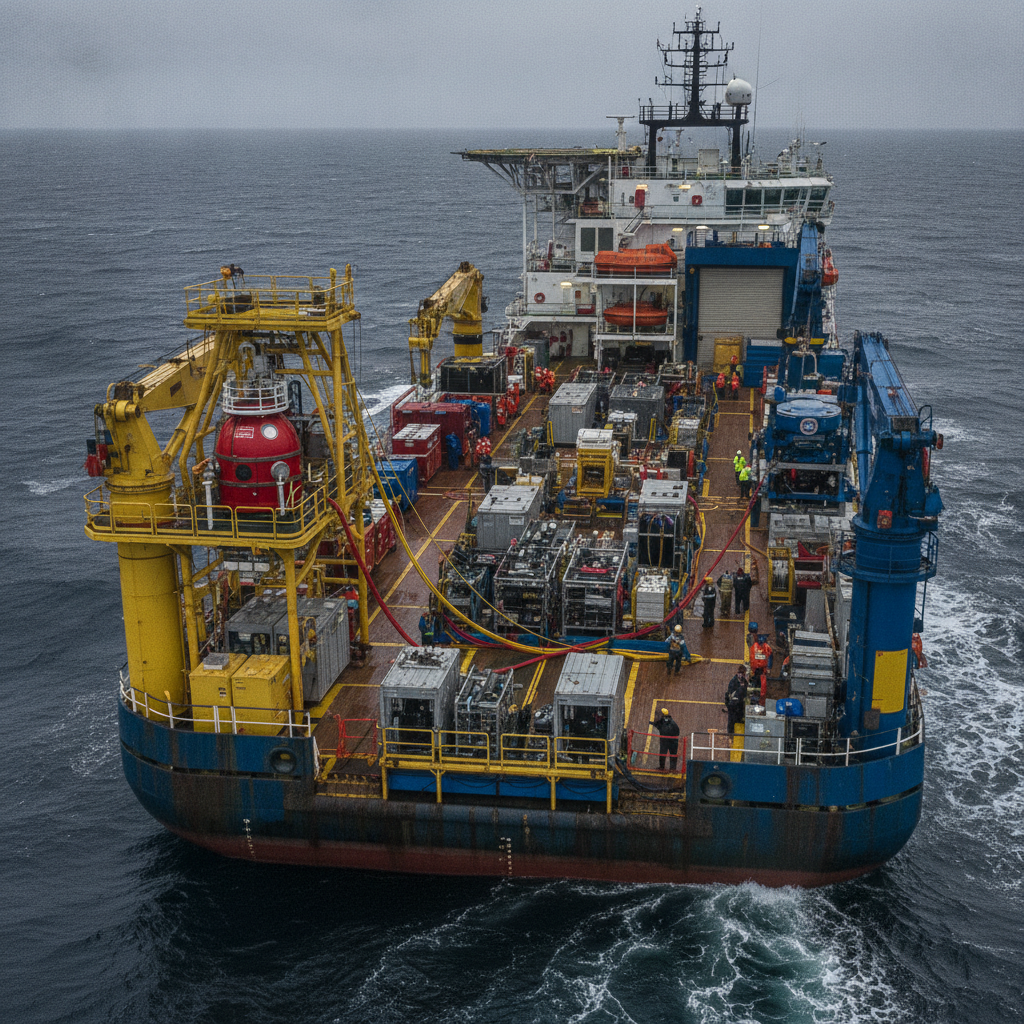
Separately contracted, same deck: governing combined subsea operations
Two subsea contractors on a third party's vessel, each contracted only to the operator and to no one else aboard. The gap left by the missing contract between them – and the machinery that has to fill it before anyone gets in the water.
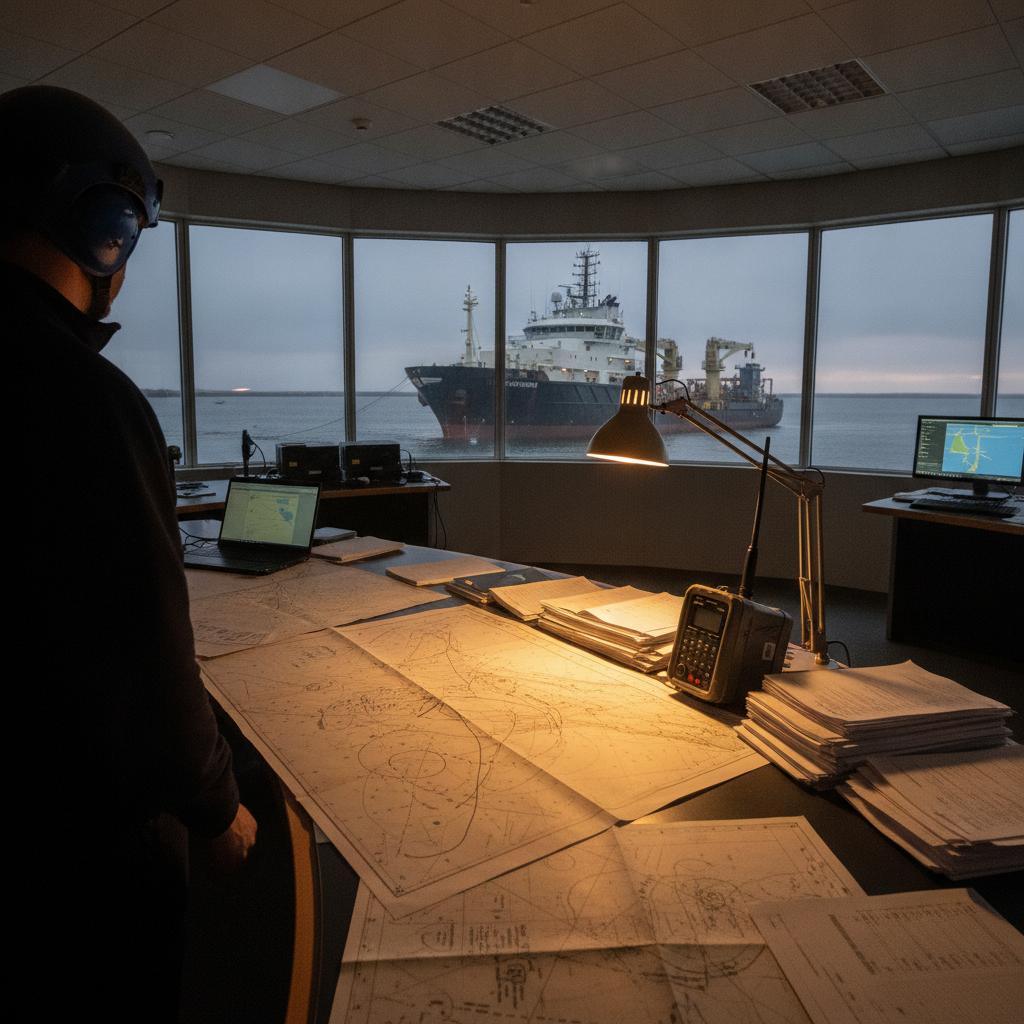
Not a map layer: geomatics and the common operating picture in crisis response
The common operating picture in offshore crisis response runs on geomatics, not "a map layer" – and operators who overlook it carry a risk they cannot see.

Managing the integrated subsea contractor: an operator's framework
How operators qualify, contract and manage integrated subsea contractors: single-integrator vs multi-vendor, IMCA/IOGP gates and build-vs-buy for resident ROV.
Offshore Geomatics Foundation Certificate · October 2026
Turn reading into certified competence
If your team makes calls like the ones above, a verifiable baseline of offshore geomatics competence is worth more than another CV claim.
Early-access list gets 40% off at launch. No spam – the waitlist is only ever used for the certificate. What the certificate covers →