Executive Summary
PXGEO has signed a one-year framework agreement with Equinor to trial autonomous subsea inspection using Saab's Sabertooth Underwater Intervention Drone, a hybrid AUV/ROV. The first call-off is underway nearshore in Norway, with the vehicle docking and inspecting infrastructure in AUV mode using onboard sonar and cameras. We examine what this signals about operator readiness, where validation programmes typically fail, and what survey managers should demand before resident drones replace tethered ROV spreads.
On this page10 sections
- What happened
- Why this matters
- The reality on deck
- Where clients get it wrong
- 1. Treating the trial as A tech demo instead of an acceptance process
- 2. Assuming autonomy removes the survey QA chain
- 3. Underestimating the exception case
- 4. Confusing “unmanned” with “uncrewed and unsupervised”
- Standards, competence, and the validation gap
- What we would want to see before scaling
What happened
PXGEO has signed a one-year framework agreement with Equinor to test and validate autonomous subsea inspection using Saab’s Sabertooth Underwater Intervention Drone (UID). PXGEO describes it as its first commercial contract in autonomous subsea inspection. The first call-off is already underway nearshore in Norway, where the vehicle docks and inspects subsea infrastructure in AUV mode using onboard sonar and cameras.
A framework agreement with phased call-offs is a deliberately cautious structure: it lets an operator buy validation, not capacity, before committing to a change in inspection method. That framing matters more than the hardware. The question these trials exist to answer is not “can the vehicle fly a survey line” but “can an operator trust autonomous behaviour enough to retire a manned spread.” This is our assessment of what such a programme has to demonstrate before that question can be answered with evidence rather than enthusiasm.
Why this matters
Agreements like this are not marketing. They are a recognisable de-risking pattern from a major operator: buy a bounded trial, define acceptance, and only then consider operational use. A one-year framework with discrete call-offs signals a validation phase, not a deployment.
The gap being closed here is real. The industry has discussed resident and uncrewed subsea systems for years, yet most inspection still runs off ROVs on dynamically positioned vessels. The Sabertooth sits squarely in the middle of that gap. It is a hybrid AUV/ROV: it can operate tether-free under battery or under tether in ROV mode, and the double-hull variant is designed to reside in a subsea docking station for extended deployments measured in months, recharging and offloading data between missions. A resident vehicle, launched on demand without a surface spread, is what many operators have wanted for a long time, because it is the part of the cost base, vessel and crew, that autonomy can actually remove.
The hardware challenge is largely tractable. The harder problem is integration and assurance: making proven components behave reliably together, and trusting their autonomous decision-making without a human in the loop. That is precisely what a validation programme has to address.
The reality on deck
“Autonomous behaviour” hides a stack of unglamorous engineering problems, and docking or autonomous inspection requires several of them to work together. None is an unsolved hardware question on its own; each is an integration-and-assurance problem, a place the trial can fail when proven parts have to perform together unsupervised.
First, positioning. A vehicle working close to a structure needs precise positioning, typically an inertial navigation system aided by a Doppler velocity log and acoustic positioning from USBL or LBL. Near steel and concrete, acoustic multipath and shadowing degrade that solution exactly where it is needed most. The vehicle has to hold a survey-grade position against the same structure that is corrupting its acoustics.
Then docking. The resident concept depends on it: the double-hull Sabertooth is built to live in a subsea docking station for months at a time, recharging and offloading data between missions, so every cycle begins and ends with an autonomous mate. Doing that under current and limited visibility is far harder than it looks in a calm demonstration, and a single failed docking can strand the vehicle or end the residency. The first call-off running nearshore in Norway is a sensible controlled environment to prove the cycle before exposing it to harsher field conditions.
And finally, data. An impressive autonomous run is worthless if the imagery and sonar do not meet the standard a piloted vehicle would deliver. Imaging needs adequate overlap, illumination, and scaling; sonar has to resolve the features that matter to integrity. Autonomy does not relax those requirements. It removes the human who would otherwise correct framing and exposure in real time, which raises the bar on the system rather than lowering it.
Where clients get it wrong
The same mistakes recur when operators and contractors approach autonomous inspection.
1. Treating the trial as A tech demo instead of an acceptance process
The point is not to show the vehicle works. It is to document what counts as acceptable autonomous behaviour and to gather the evidence. A client who buys an impressive demonstration gets good video and no comparative data. Define success and failure criteria first: positioning accuracy, docking success rate, scope of self-inspection, and data quality measured against integrity requirements.
2. Assuming autonomy removes the survey QA chain
It does not. An autonomous vehicle delivers the same survey deliverables and therefore needs the same quality control. Visual inspection, sonar mosaics, and dimensional data all have to be verified. Two distinct quality questions sit underneath that. Positioning and dimensional uncertainty are governed by the same survey-accuracy thinking as any other survey, the kind of total-propagated-uncertainty discipline codified in standards such as IHO S-44; defect-detection quality, by contrast, is governed by inspection criteria, coverage, resolution, lighting, and the ability to resolve the corrosion, cracking, or coating damage that integrity engineers act on, not by a bathymetric accuracy order. Both have to be specified, and autonomy if anything demands tighter QA on each, because there is no operator watching the data come in. Build verification that catches gaps and errors before demobilisation, not after.
3. Underestimating the exception case
Autonomy works when the mission goes to plan. The real test is what happens when it does not: an obstruction, a bloom fouling the cameras, an unexpected anomaly. Operational readiness is proven by the fallbacks, abort to a waypoint, return to dock, hand over to remote control, and by demonstrating them, not assuming them.
4. Confusing “unmanned” with “uncrewed and unsupervised”
Marketing language blurs this. Supervised autonomy means a pilot can intervene at any time; that is a different risk profile from full unsupervised autonomy. Be explicit about the level of control in use: communication channels, acceptable latency, and the conditions that trigger intervention.
Standards, competence, and the validation gap
Standards for autonomous subsea inspection are still maturing, which is exactly why validation testing carries the weight here. IMCA guidance remains the working baseline and can be adapted to autonomous systems: R 004, the guidance for the safe and efficient operation of ROVs, now covers remote operations centres, and C 005 sets out competence assurance and assessment for the Remote Systems and ROV division. Industry bodies including IMCA and DNV continue to develop recommendations for remote and autonomous operation. Operators should write those references into the trial scope and measure trial data against them as they stand, rather than retrofitting compliance afterwards.
Competence is the less obvious half of the gap. Running an underwater drone is not the same as running an ROV. It needs people fluent in autonomous control, mission planning, acoustic positioning, data handling, and the subsea infrastructure being inspected, and skilled personnel across all of those areas are scarce. A framework agreement is, in effect, a training programme whether it is labelled one or not. Treat the trial as a learning exercise and document the lessons.
And the purpose stays the same: asset integrity. Integrity engineers care about defect detection, not autonomy for its own sake. If an autonomous run misses what a manned inspection would catch, corrosion, cracking, displaced protection, the autonomy is worthless. The only way to know is to compare autonomous results against reference data from a piloted vehicle on the same infrastructure.
What we would want to see before scaling
For this kind of year-long trial to count as progress rather than a showcase, we would want survey and asset managers to insist on the following.
- A baseline comparison. Run autonomous and piloted inspections on identical assets and require the autonomous run to meet or exceed the baseline before it replaces anything.
- A quantitative read on autonomous performance. Capture docking success, the share of the mission requiring no intervention, and positional accuracy, with targets set in advance rather than judged after the fact.
- A proven remote-intervention path. Demonstrate repeatedly that a remote pilot can take control immediately on failure, and measure latency and recovery success.
- Data-quality gates for autonomous runs. Apply automated checks before the vehicle leaves site: coverage, overlap, and lighting against the inspection criteria that govern defect detection, and positional and dimensional uncertainty against survey-accuracy references such as IHO S-44.
- A documented control model. Spell out the levels of human control, the comms architecture, and the triggers for intervention, and assign responsibilities before any scale-up.
Account for environment, too. A nearshore Norwegian trial proves the concept; acceptance for operational use needs realistic depths, currents, and visibility, reached in phases rather than in a single jump from sheltered water to an active field.
The direction of travel is clear. Autonomous and piloted systems will share inspection work, and operators like Equinor are setting the pace through disciplined validation. The value is not in the technology looking impressive. It is in demonstrating, rigorously, that an autonomous system can deliver the integrity assurance a manned system does. Earn that acceptance and the technology follows. Skip it and you are left with good footage and no basis to operate.
Based on: PXGEO Secures Equinor Deal for Autonomous Subsea Inspection Trials
Published by
Unmanned Systems Review Board
ROV, AUV & Autonomous Subsea Systems
A technical review board evaluating ROV and AUV capabilities, autonomous inspection methodologies, and unmanned subsea system integration for survey and construction support.
Read next
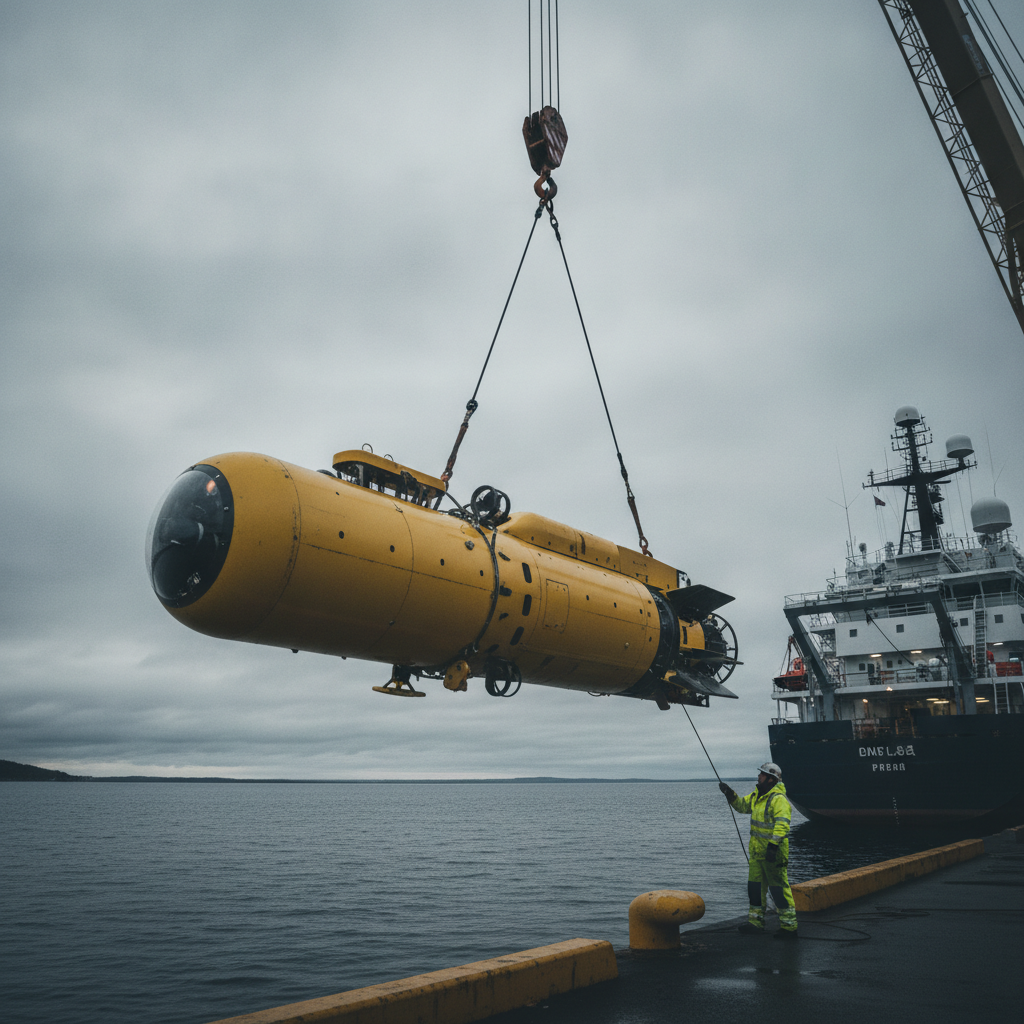
Buy the AUV or the capability? The HUGIN Superior question
Norway's HUGIN Superior brings deep-sea AUV mapping in-house. We unpack the navigation, bathymetry and assurance decisions owners face at 6,000 m and high latitude.
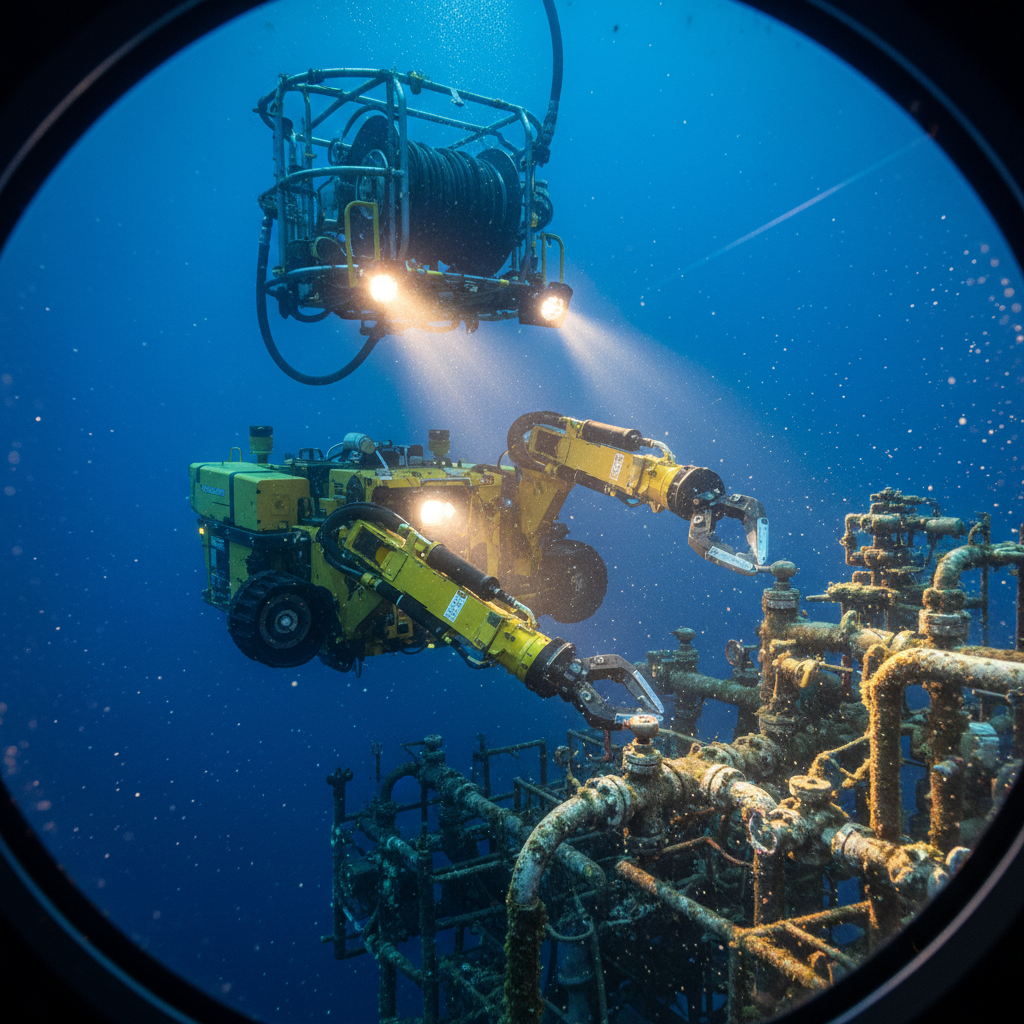
Dual-role PSVs: when your supply vessel becomes a subsea worksite
Why operators install ROV and diving spreads on chartered PSVs instead of hiring dedicated subsea vessels – and the Bridging Document most get wrong.
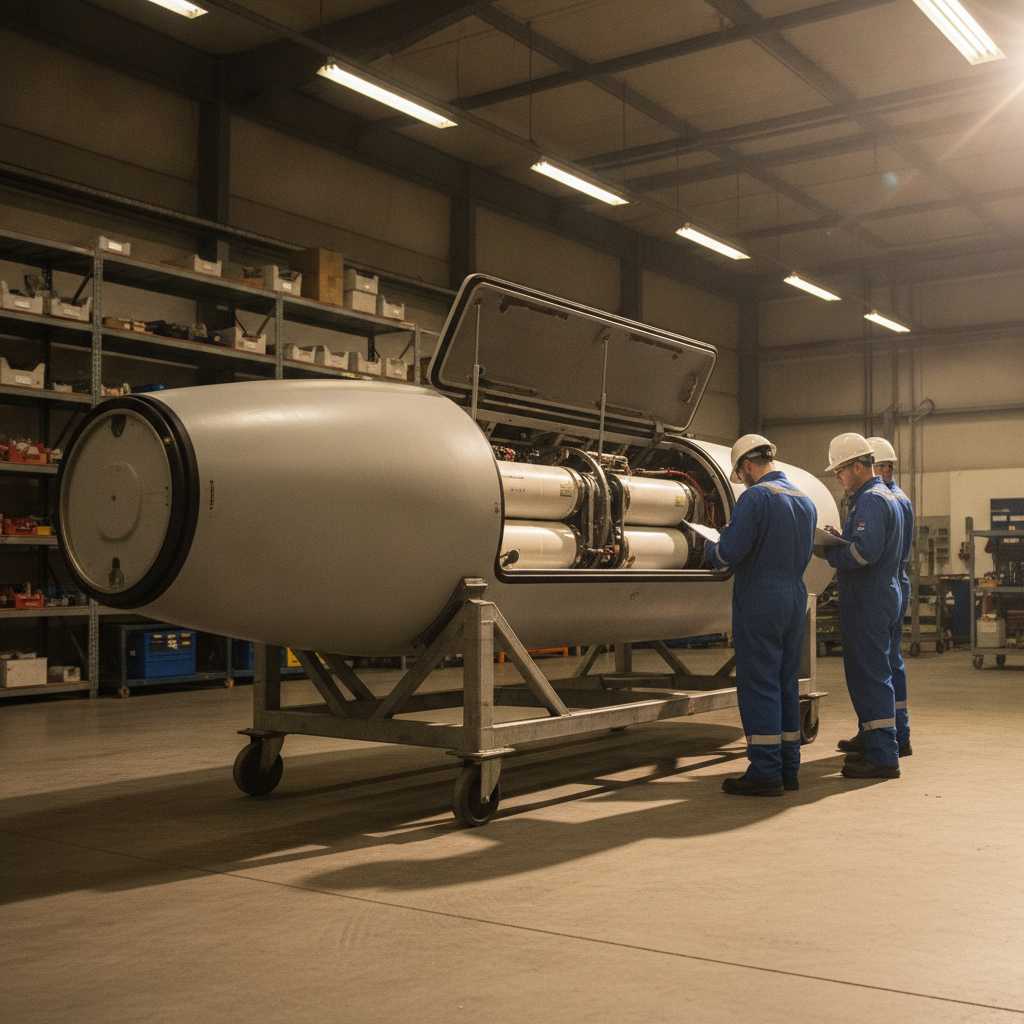
Long-endurance AUVs: rethinking survey planning for multi-week dives
Cellula and DRDC's 385-hour Envoy AUV run signals a shift. We analyse what changes in survey planning when your platform stays submerged for weeks.
Offshore Geomatics Foundation Certificate · October 2026
Turn reading into certified competence
Decisions like this one are easier to defend when the fundamentals behind them are certified, not assumed.
Early-access list gets 40% off at launch. No spam – the waitlist is only ever used for the certificate. What the certificate covers →