Executive Summary
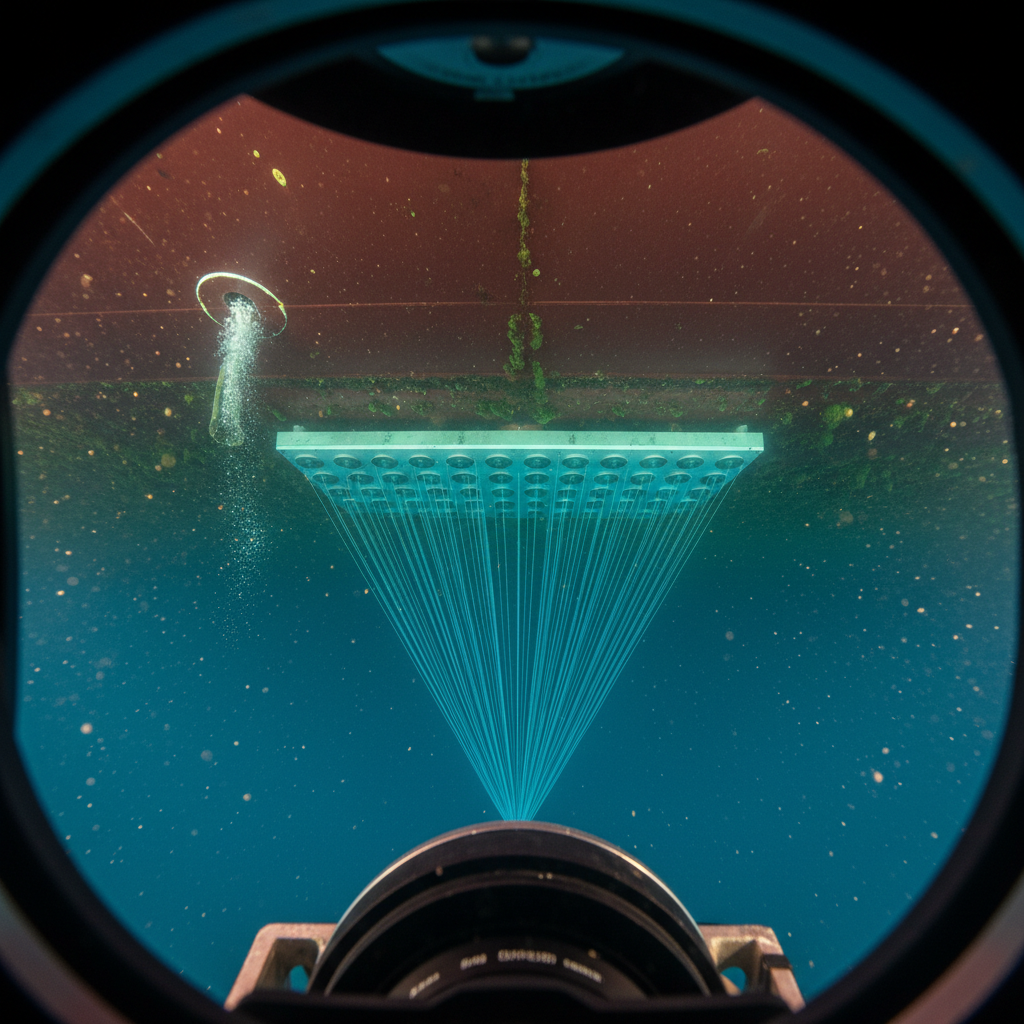
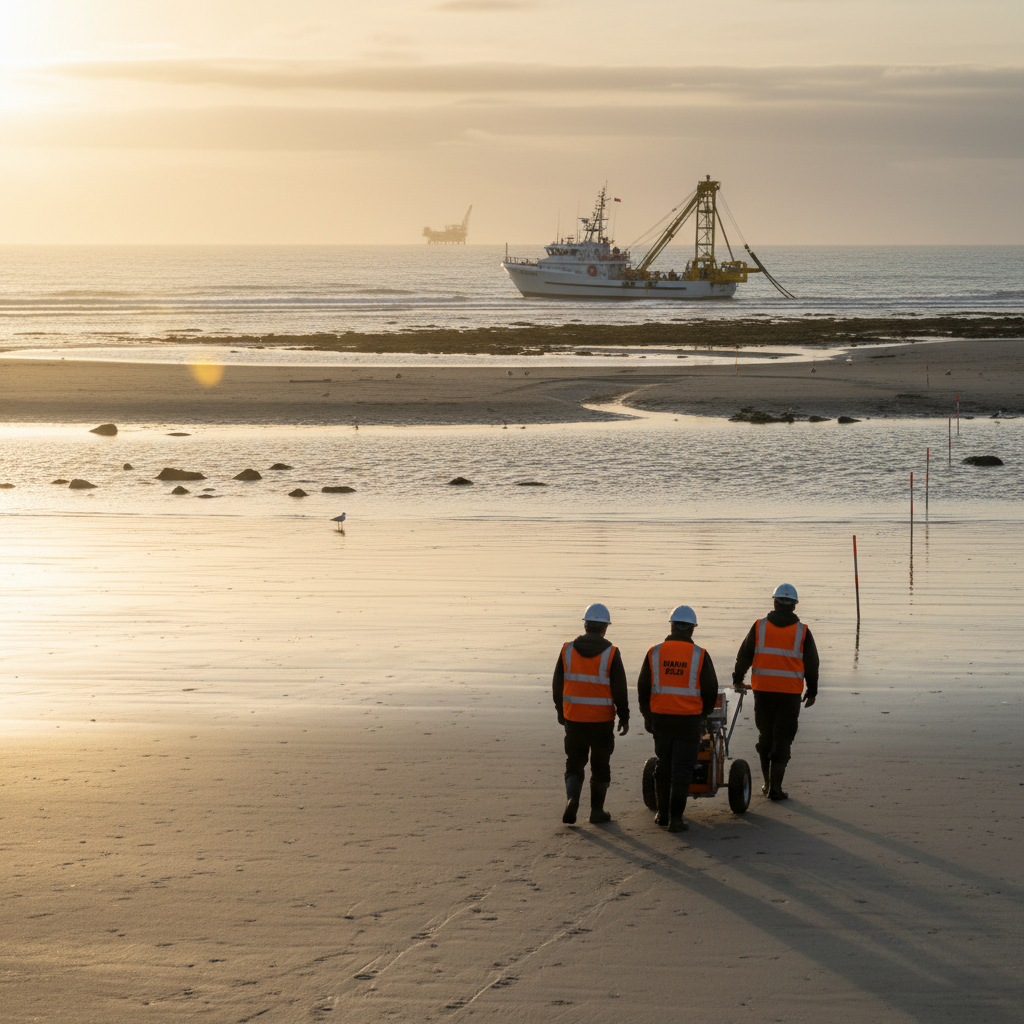
Oil and gas operators charter PSVs and AHTS on long-term contracts that leav e vessels idle between supply runs. Installing ROV spreads, diving systems, or survey equipment on these assets can cut subsea project costs substantial ly compared with dedicated vessel charters. Beach Energy, Petrobras, and She ll have each committed to the model – but success depends on honest assessme nt of DP capability, deck space, weather limits, and compliance with IMCA D 035 guidance on vessels of opportunity. The dual-contractor model (placing b oth ROV and diving contractors on the same vessel) compounds the savings but introduces a contractual interface that most operators underestimate. A str uctured Bridging Document, developed before mobilisation, is what separates a cost-effective campaign from an operational breakdown.
The Economics
Consider the situation: you have chartered a large PSV at $25,000 per day on a two-year contract to service your platforms. Three supply runs a week, and the rest of the time the vessel sits alongside, burning through your budget. Meanwhile, you have a backlog of underwater inspections – platform legs, pipework, anode surveys, the whole scope. Do you really want to spend $80,000–$120,000 per day on a dedicated subsea construction vessel, or do you outfit the PSV with an ROV spread?
You have already committed the PSV cost. The incremental spend is the ROV mobilisation ($50,000–$150,000 depending on location and work scope), the crew (ROV technicians and supervisor – typically $5,000–$8,000 per day for the full ROV team, varying by region and contractor), and consumables. A 10-day inspection campaign therefore adds roughly $100,000–$230,000 in incremental cost on top of the vessel you are already paying for. Compare that to $800,000–$1,200,000 for a specialist vessel charter over the same period – where you are paying the full vessel day rate from scratch. The saving is significant even before you factor in avoided mobilisation transit.
Scale the arithmetic to a 60-day programme and the gap widens further. A dedicated CSV at $80,000–$120,000 per day comes in at $4.8–7.2 million for vessel cost alone. The same scope from a capable PSV, where the vessel cost is already absorbed, adds $600,000–$1,400,000 in incremental ROV and crew cost. For operators managing multiple platforms with recurring inspection obligations, the cumulative annual saving can be substantial.
There is also a scheduling advantage. Dedicated subsea vessels are shared assets, juggling multiple clients at high utilisation rates. Your PSV mobilises on your timeline – no queue, no waiting for a weather window that suits someone else’s programme.
We have seen the dual-purpose approach deliver real results. We have also seen it fail when operators misjudge the capabilities of their vessel.
Real Operators Running Dual-Function Programmes
This is not theory. In every major offshore basin, operators are actively running dual-function vessel programmes.
In the Philippines, the DOF vessel Skandi Hawk has been supporting operations in the Malampaya field – not just for supply runs, but also for subsea inspection, repair, and maintenance. Shell held the operating interest before transferring it to Prime Energy Resources Development Corporation as part of its divestment from the Malampaya consortium. The long-duration commitment to a single multi-role vessel in this field underlines the economic logic.
Beach Energy chartered the MMA Coral for deployment in Bass Strait, initially from late 2022. The vessel carried a triple mandate: platform supply, drilling support, and subsea inspection. The configuration included an ROV spread and a modular active heave-compensated lift system.
Petrobras has committed heavily to the model, signing multi-year contracts with vessels equipped with work-class ROVs for combined anchor-handling and ROV intervention scopes. OceanPact alone secured a substantial multi-billion BRL contract package covering multiple vessels over several years.
Hornbeck Offshore’s HOS Bayou is another example. Fitted with work-class ROVs and a heavy-lift crane, it can execute survey, inspection, and light construction tasks alongside its supply role.
The Reality on Deck
IMCA D 035 provides detailed guidance on selecting vessels of opportunity for diving operations, and the same principles apply to ROV deployments from non-specialist hulls. The documented problems include poor station-keeping, inadequate or absent DP systems, cramped working decks, and insufficient power generation for subsea operations. The guidance is unambiguous about the assessment criteria.
We have assessed our share of these vessels, and vessel owners tend to be optimistic. The common assumption is that any supply vessel with bow thrusters can substitute for a DP1-rated platform. It cannot. A vessel that holds position adequately during static cargo operations will often struggle when currents and environmental loads demand the precision that ROV work requires.
Weather sensitivity is another underestimated factor. A PSV rated for cargo operations in Beaufort 6–7 conditions will frequently lose operability for ROV work above Beaufort 4–5. The actual impact varies significantly by region – in the North Sea, where sea states frequently exceed Beaufort 5, lost weather days can consume 30% or more of a campaign. In more benign environments such as West Africa or parts of Southeast Asia, the gap may be much smaller. The point is that weather downtime specific to the operating region must be modelled into the project estimate, not assumed to be negligible.
What Actually Works – and What Does Not
Dual-role PSVs perform well on a specific category of subsea work: general visual inspections (GVI), close visual inspections (CVI), pipeline route surveys, cathodic protection surveys, debris clearance, and light intervention tasks. These scopes have moderate positioning requirements and tolerate the environmental limitations of a supply vessel hull.
The boundary matters. Heavy construction, pipeline trenching and backfill, large-diameter spool installation, and deep-water intervention requiring DP2 or DP3 redundancy sit outside the capability of most PSVs. The practical threshold is whether the scope demands redundant positioning systems or saturation diving support – if either is required, a purpose-built subsea vessel is the appropriate platform. Pushing a vessel beyond its operational envelope does not save money; it generates downtime, incident reports, and reputational damage.
Where Clients Get It Wrong
1. Assuming Bow Thrusters Equal Dynamic Positioning
Bow thrusters do not make a PSV DP1-capable. True DP systems provide automatic, closed-loop thrust control using position references – DGPS, acoustics, or other approved reference systems – to hold station within defined tolerances. Manual joystick control, however skilled the DP operator, is not equivalent. We see too many operators committing vessels to precision ROV work when the station-keeping system cannot support it.
2. Underestimating Deck Space Requirements
An empty cargo deck looks spacious until the ROV contractor mobilises. An ROV spread – control cabin, LARS, cable winch, HPU, workshop container, spares – consumes significant deck area. What remains must still accommodate safe walkways, emergency escape routes, zoned access, and the vessel’s primary cargo function. The layout must be planned, not discovered during mobilisation.
3. Ignoring IMCA Compliance Requirements
IMCA D 035 on vessels of opportunity and IMCA R 004 on ROV operations exist for a reason. Operators who treat compliance as an afterthought find themselves dealing with stop-work orders, delayed operations, and audit findings that erode the cost advantage they were chasing. Regulatory and client compliance requirements should be addressed in the vessel selection phase, not resolved once the spread is on deck.
4. Failing to Account for Power Limitations
ROV systems draw substantial power. A work-class ROV can require 200–400 kW at the umbilical, but total system demand – including HPU, LARS, winch drives, and control cabin – can exceed 600 kW. Stack that on top of DP thrusters, hotel load, and HVAC, and the vessel’s generators may be operating at or beyond their rated capacity. A power balance analysis with adequate margins should be completed during the vessel assessment phase. If the analysis shows no headroom, the vessel is not suitable for the intended scope.
5. Overlooking Insurance and P&I Implications
Repurposing a PSV for subsea operations changes the vessel’s risk profile. P&I clubs and hull underwriters assess premiums based on the declared scope of operations. If the vessel’s insurance cover was placed on the basis of supply duties and the operator subsequently deploys diving or ROV spreads without notifying underwriters, claims arising from those operations may not be covered. The insurance review should happen alongside the vessel assessment, not after the equipment is on deck.
6. Improvising the Bridging Document
This is where the dual-contractor model breaks down most often. When an operator places two independent contractors on the same vessel without a pre-agreed interface document, the coordination gaps are not hypothetical – they surface on the first day of operations. The structure and content of a proper Bridging Document is covered in detail below.
Two Contractors, One Deck: ROV and Diving Side by Side
A scenario that is becoming increasingly common: the operator has a PSV on long-term charter. An ROV contractor mobilises for structural inspection and pipeline survey. Simultaneously, a diving contractor arrives for anode replacement, marine growth removal, and minor repairs flagged by the ROV team. Two crews, two equipment spreads, two sets of procedures – one deck, one vessel, one set of shared constraints.
Instead of two separate mobilisations, two transits, and two charter periods, everything happens from one hull. Transit to a remote field can take 12–24 hours each way – dead time duplicated for each contractor if they operate independently. Combine them and you eliminate redundant logistics: one crew change instead of two, one weather window instead of two separate campaigns. The exact saving depends on transit distance, campaign duration, and regional logistics costs, but compared with running two sequential single-contractor vessel programmes, the reduction in total programme cost is consistently significant.
The operational efficiency goes beyond logistics. The ROV runs a preliminary survey, identifies and marks repair points, and the divers proceed directly to the work scope. There is no week-long gap between defect identification and repair execution. Survey and intervention happen on the same vessel, during the same mobilisation, with shared situational awareness.
The Bridging Document Problem
Two contractors on one vessel means two independent HSE management systems, two emergency response plans, and two sets of operating procedures. The critical structural issue: these contractors have no contractual relationship with each other. Contractor A holds a contract with the operator. Contractor B holds a separate contract with the operator. Between A and B there is no binding agreement, no chain of command, no formal interface.
Without a properly structured Bridging Document, this gap becomes the single point of failure for the entire operation. IMCA M 203 provides guidance on simultaneous operations that should inform the document’s structure, and IMCA D 054 addresses ROV intervention during diving operations specifically.
The Bridging Document must address:
- HSE system integration. Whose procedure takes priority when they conflict? Who holds stop-work authority? How are simultaneous operations coordinated between two independent safety management systems?
- Deck zones of responsibility. Where does the ROV contractor’s working area end and the diving contractor’s zone begin? Who controls the LARS area? Who has priority during launch and recovery operations?
- Unified Permit to Work. Simultaneous ROV deployment and diver-in-water is a high-risk configuration. The permit system must define who issues the permit, what restrictions apply during concurrent operations, and what conditions trigger suspension.
- Communication protocols. The diving supervisor must have real-time awareness of ROV position and heading. The ROV pilot must know the diving work zone and maintain safe standoff distances. This is a life-safety requirement, not an administrative preference.
- Emergency procedures. Simultaneous emergency recovery of a diver and an ROV – who gets priority? The diver, always. But that priority must be formalised, drilled, and documented, not left to assumption.
- SIMOPS matrix. A clear, unambiguous table defining which combinations of concurrent operations are permissible and which are prohibited. No grey areas, no room for interpretation.
The Risks That Get Underestimated
The contractual gap between contractors creates the most consequential risk. Contractor A cannot direct Contractor B’s personnel. Contractor B has no authority over Contractor A’s team. All coordination must flow through the operator’s on-board representative. If that person lacks the seniority, experience, or authority to make real-time operational decisions, the coordination mechanism fails.
Priority conflicts are inevitable. Diving communications require controlled noise levels on deck; the ROV crew may need to operate a winch at the same time. Without a clear resolution mechanism defined in the SIMOPS matrix, these conflicts escalate into stand-offs that consume entire shift rotations.
Deck space compounds the problem. A diving spread – decompression chamber, gas racks, hot water unit, diving winches, umbilical reels – and an ROV spread – control cabin, LARS, cable winch, workshop, spares containers – both compete for the same finite deck area. On a purpose-built DSV, these systems are integrated into the vessel design from the outset. On a PSV, every arrangement is a compromise.
Power demand adds a third layer. A diving spread running hot water generation and gas mixing, combined with a work-class ROV system drawing 600+ kW total, places a serious load on generators that were sized for supply operations, not concurrent subsea campaigns.
When the Model Delivers
The dual-contractor model works reliably when several conditions are met:
- The Bridging Document is developed, reviewed, and signed by all parties before mobilisation – not drafted on the vessel after equipment arrives.
- The operator assigns a Company Representative with unambiguous authority to direct and, if necessary, stop work for both contractors.
- Concurrent operations follow a SIMOPS matrix aligned with IMCA M 203, with clear, binary decisions – permitted or not permitted.
- The vessel genuinely accommodates both spreads without compromising safety margins on deck space, power generation, accommodation capacity, or workshop access.
- The vessel crew understands the operational requirements of both ROV and diving operations, not just cargo handling.
Where individual conditions are partially met – for example, deck space is tight but the work scope is light – professional judgement applies. The conditions above are not binary pass/fail criteria, but the further the operation departs from them, the higher the residual risk and the more robust the mitigation needs to be.
Before You Commit: A Practical Checklist
The dual-role model works. The case studies and the economics confirm that. But the savings materialise only when the assessment is honest and the preparation is thorough. Before committing a PSV to subsea operations:
- Assess the vessel against IMCA D 035 criteria – station-keeping, deck space, power generation, accommodation, and freeboard. If the vessel does not meet the baseline, no amount of planning will compensate.
- Complete a power balance analysis that accounts for total ROV system demand (not just umbilical draw), DP thrusters under load, hotel services, and – if applicable – the diving spread. Build in margin.
- Model weather downtime for the specific operating region, comparing the vessel’s operability limits for cargo versus subsea work. The delta goes directly into your project cost estimate.
- Notify underwriters and confirm that the vessel’s P&I and hull cover extends to the planned scope of operations. Do this during vessel selection, not after mobilisation.
- If running a dual-contractor model, write the Bridging Document first – before either contractor mobilises equipment. Allow two weeks for drafting, review, and sign-off. The document should reference IMCA M 203 for SIMOPS structure and IMCA D 054 for ROV-diving interface.
The vessel is already on charter. The question is whether you are using it to its full potential – or paying twice for capability you already have alongside.